

RESEARCH

Architectures, Systems, and Computing for Intelligence Innovations

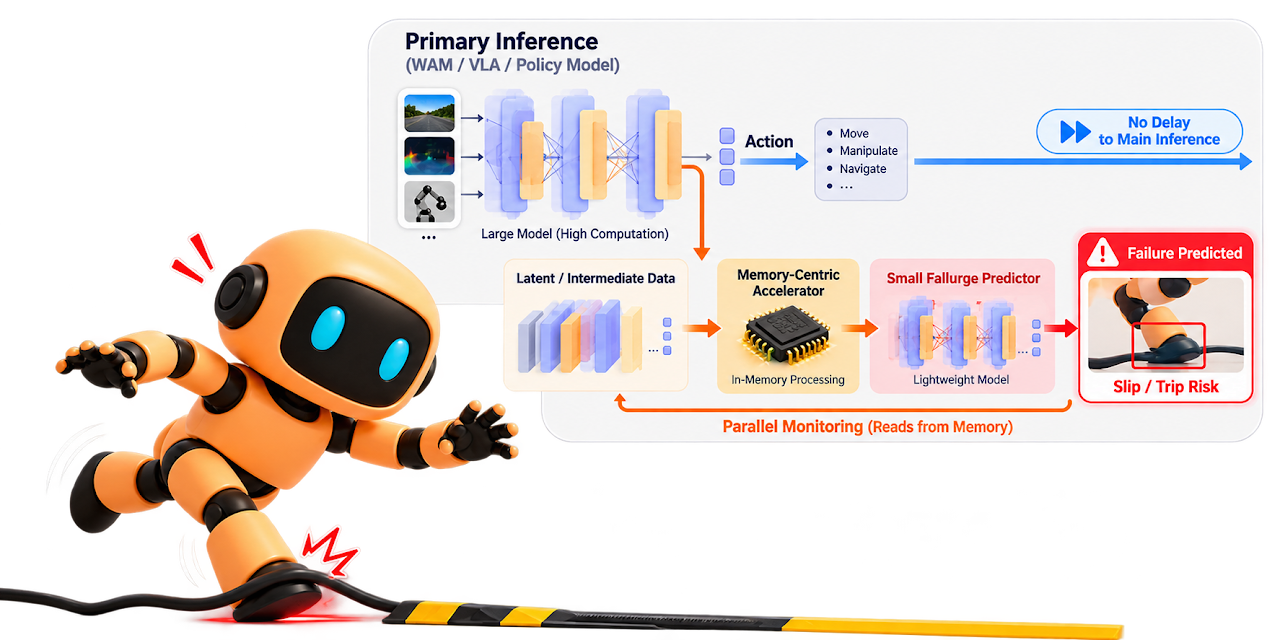
Architectures: We design memory-centric computing systems, neural processing units, and specialized accelerators that minimize data movement and overcome the memory wall, enabling efficient AI training, inference, and real-time failure monitoring from edge to datacenter.

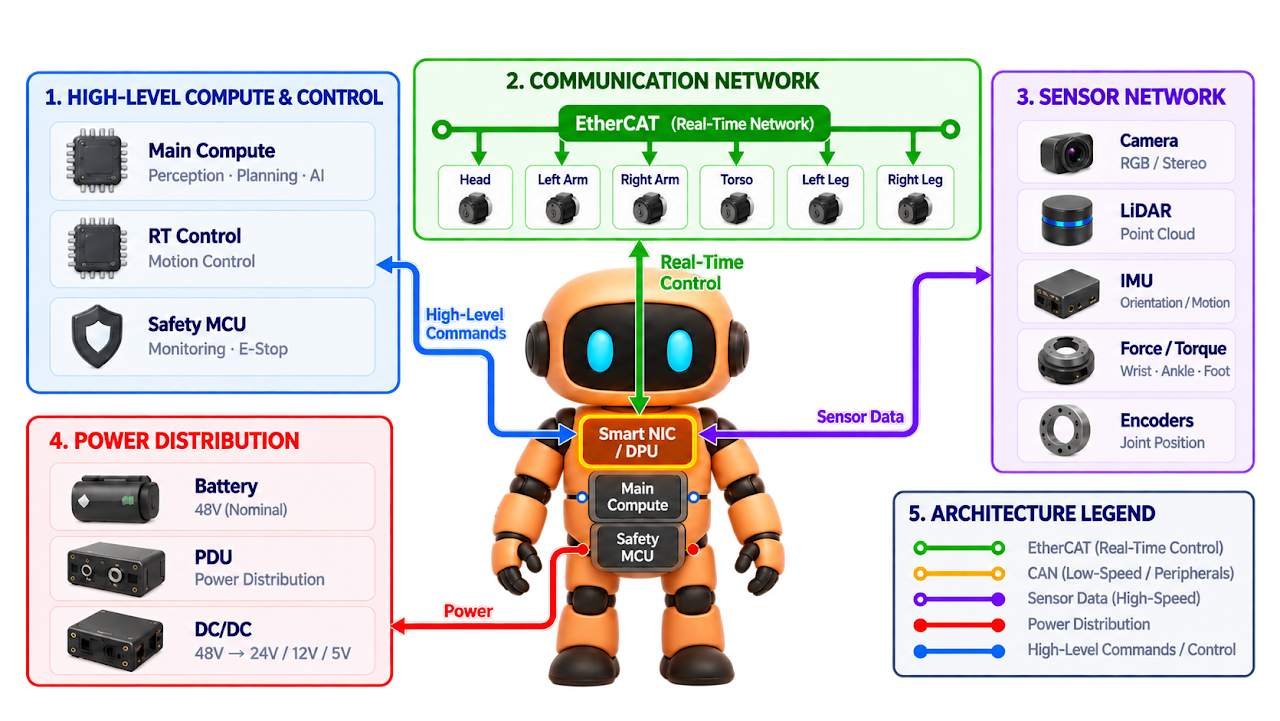
Systems: Embodied AI demands heavy computation and seamless sensor integration, while embedded robots are tightly constrained in power and memory. We bridge this gap with specialized computing and intelligent I/O architectures built on SmartNICs and DPUs.

Computing: We optimize AI and robotic frameworks through context-aware dynamic optimization and hardware–software co-design, reducing memory footprint and latency while preserving accuracy.

Research Projects

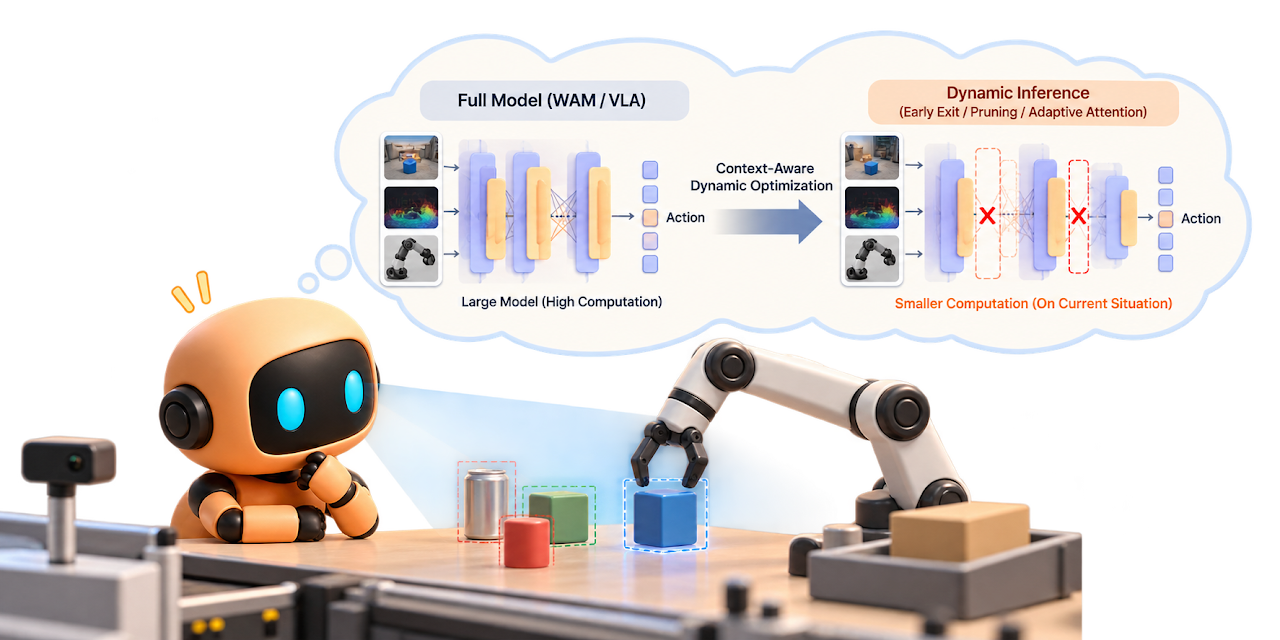
Context-Aware Dynamic Optimization for Physical AI

Context-aware dynamic optimization

Physical AI models such as WAMs and VLAs must perceive and act in real time on resource-constrained robots. Going beyond static model compression, we use intermediate latent representations to gauge situational complexity and adapt computation on the fly through Early Exit, Dynamic Pruning, and Adaptive Attention Masking — saving compute in simple situations while keeping accuracy in critical ones.
Robotic Networking & Intelligent I/O Systems

Robotic networking and intelligent I/O architecture

Robots must process massive, heterogeneous sensor streams (CAN, cameras, LiDAR) in real time, which causes CPU overhead, resource contention, and latency. We offload data processing and sensor fusion to SmartNICs and DPUs, streamlining the end-to-end data path from sensors to AI accelerators for low-latency, reliable robotic computing.

Real-Time Failure Prediction & Memory-Centric Acceleration for Physical AI

Real-time failure prediction

Because Physical AI acts in the real world, failures can cause physical accidents. We build lightweight networks that predict failures before actions are executed, using latent representations from the primary WAM/VLA model, and memory-centric accelerators that reuse in-memory data so failure monitoring runs in parallel without slowing primary inference.

Funded Projects